
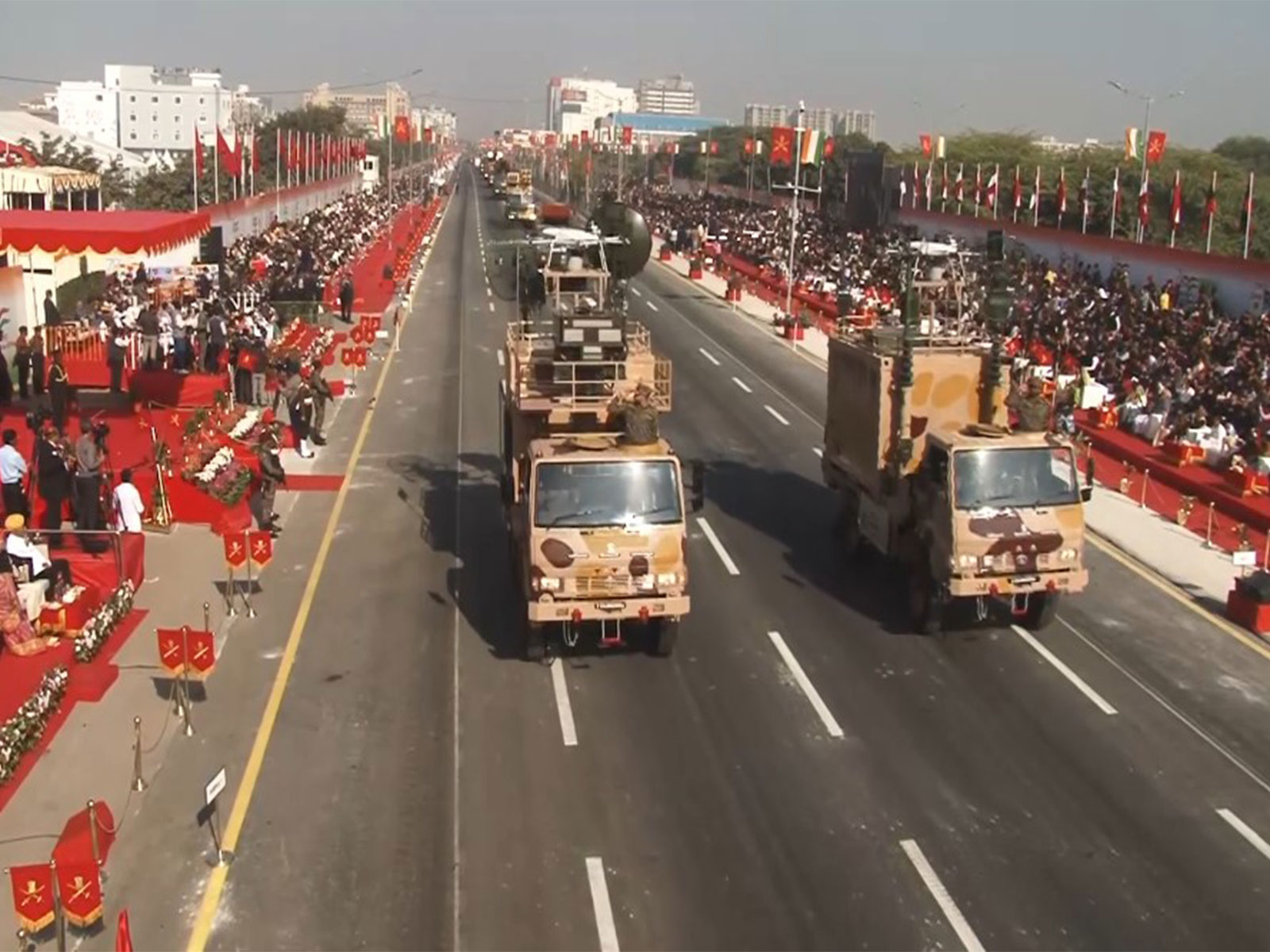
Jaipur (Rajasthan) : For the first time, Jaipur’s public streets witnessed the grandeur of the Army Day parade on Thursday, as the Indian Army showcased its valour, discipline and growing technical capabilities during the 78th Army Day celebrations. Notably, this marked the first occasion that Army Day events in Jaipur were held outside the cantonment area and opened to the public.
The parade featured mechanised and infantry units, paratroopers and a wide array of modern combat capabilities, reflecting the Army’s ongoing transformation towards future-ready warfare. A key highlight was the first public appearance of the newly raised Bhairav Battalion, formed as part of the Army’s recent restructuring based on lessons drawn from global conflicts and India’s own Operation Sindoor.
Positioned between the Para Special Forces and regular infantry units, the Bhairav Battalion has been raised to meet the demands of modern warfare, providing swift and precise offensive responses to emerging threats. In a striking display, battalion personnel marched with painted faces, chanting their war cry as their boots thudded against the pavement, drawing loud applause from spectators.
Multiple other formations, including the Garhwal Scouts, Sikkim Scouts and Arunachal Scouts, also marched past the saluting dais in full combat gear. The parade further highlighted the role of youth in nation-building, with an all-girls marching contingent of the National Cadet Corps (NCC), led by Senior Under Officer Kavitha Kumawar, drawing special attention.
Demonstrating the Army’s emphasis on Atmanirbharta, the parade showcased advanced indigenous technologies. Robot dogs and all-terrain vehicles led the display of the BrahMos missile—India’s indigenously developed long-range, ramjet-powered supersonic cruise missile.
Highlighting advancements in artificial intelligence and counter-drone warfare, the Army presented its Integrated Drone Detection and Interdiction System (IDDIS), led by Captain Priya Yadav of the 401 Light AAV Regiment. The system is designed to detect aerial threats, classify them for “soft” or “hard” kill options, and neutralise them through destruction or electronic jamming. Combat drones were also showcased, led by Major Anhad Singh Chatadar of the 624 AAV Battalion.
The ‘Drone Shakti’ initiative was another major attraction, underscoring India’s indigenous drone fabrication programme that integrates artificial intelligence and robotics. The display, led by Major Arun Kumar from the 10 Corps Zone Workshop, featured multiple drones mounted on a vehicle platform.
Other firepower on display included the upgraded BM-21 Grad multi-barrel rocket launcher, the SMERCH system capable of firing 300 mm rockets up to a range of 90 kilometres, and artillery platforms such as the Advanced Towed Artillery Gun System and the M777 ultra-light howitzer.
Air defence systems showcased included the indigenous Akashteer system with medium-range surface-to-air missiles, which proved its effectiveness during Operation Sindoor by neutralising Turkish- and Chinese-origin drones operated by Pakistan. The combat-proven system has since attracted global interest. The Igla man-portable air defence system was also part of the parade, rounding off a comprehensive display of the Indian Army’s technological strength and commitment to self-reliance.