
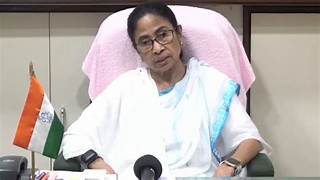
Kolkata / New Delhi : A deepening crisis within the Trinamool Congress (TMC) took a dramatic turn on Tuesday after party chief Mamata Banerjee appointed MP Kalyan Banerjee as the party’s Chief Whip in the Lok Sabha. In a letter addressed to Lok Sabha Speaker Om Birla, Banerjee requested that the appointment be implemented with immediate effect.
The move comes just a day after a major rebellion within the party, with 20 of TMC’s 28 Lok Sabha MPs reportedly breaking ranks with the leadership and deciding to support the NDA government. The rebel lawmakers had elected MP Kakoli Ghosh Dastidar as their own Chief Whip.
Kakoli Ghosh subsequently submitted a letter signed by the rebel MPs to the Lok Sabha Speaker, seeking separate seating arrangements and recognition as an independent parliamentary bloc distinct from the Trinamool Congress.
What Does a Chief Whip Do?
The Chief Whip is a senior leader responsible for maintaining party discipline among lawmakers and ensuring that MPs follow the party’s official position during parliamentary proceedings. The role includes enforcing attendance, coordinating voting strategies, and initiating disciplinary action against members who defy party directives.
TMC Faces Growing Internal Revolt
The latest developments highlight a widening split within the Trinamool Congress. The party currently has 28 MPs in the Lok Sabha and 13 MPs in the Rajya Sabha.
Earlier, on June 3, a separate faction comprising 58 of West Bengal’s 80 MLAs reportedly formed a breakaway group under the leadership of Ritabrata, signaling a broader organizational crisis within the ruling party.
According to reports, the rebel MPs held a secret meeting on the night of June 8 to finalize their strategy before formally communicating their decision to parliamentary authorities.
Kakoli Ghosh: “I Am Still the Chief Whip”
Speaking on Monday, Kakoli Ghosh Dastidar asserted that she remains the party’s Chief Whip in the Lok Sabha.
Although she left the Trinamool Congress on May 27, she has not resigned from her position as a Member of Parliament.
“I have been with Mamata Banerjee since 1986. In 2005, I was encouraged to contest even a councillor election. I have fought my way to this position. My head may be cut off, but it will never bow. I have endured enough,” she said.
War of Words Intensifies
Rajya Sabha MP Sagarika Ghosh criticized the rebel lawmakers, saying:
“Loyalty seems to last only until victory. One phone call from Amit Shah and all morality disappears. It is deeply shameful.”
Meanwhile, newly appointed Chief Whip Kalyan Banerjee defended the party’s position and took aim at the BJP-led establishment.
“You may have the Chief Minister’s office, the ED, the CBI, and other instruments of power. But I have ‘Maa, Mati, Manush,’ my party workers, and the people of Bengal,” Banerjee said.
Former Rajya Sabha MP Sukhendu Sekhar Roy also commented on his departure from the party, stating that his decision was not made under pressure.
“It was a decision guided by my conscience. I felt that enough was enough,” he said.
Political Implications
The rebellion by a majority of TMC’s Lok Sabha MPs represents one of the most serious internal challenges faced by Mamata Banerjee’s leadership in recent years. With competing claims over the position of Chief Whip and demands for a separate parliamentary identity, the battle is now likely to move to Parliament and could have significant implications for opposition politics ahead of future elections.