
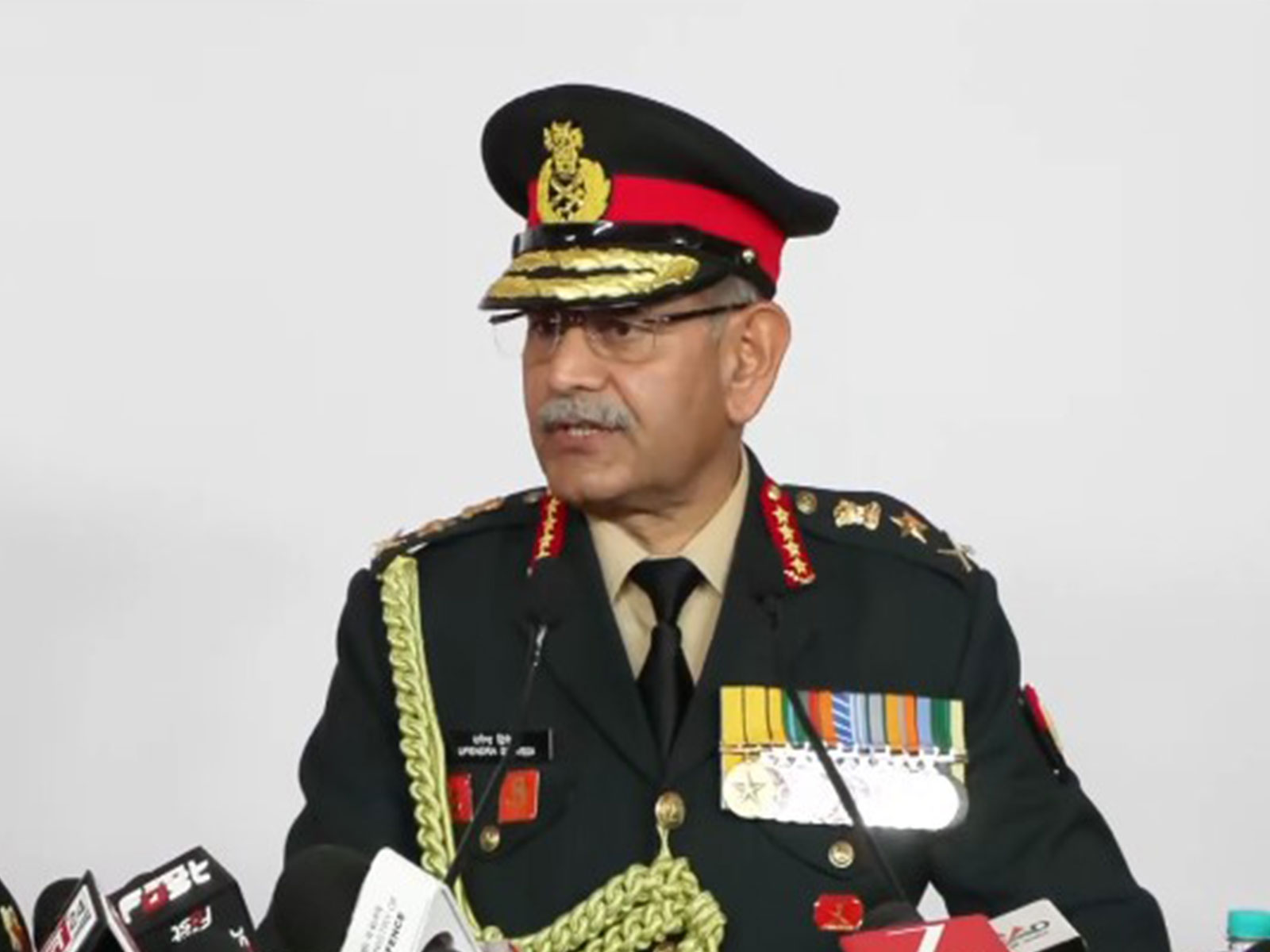
Jaipur (Rajasthan) : Chief of Army Staff (COAS) General Upendra Dwivedi on Thursday said that the Indian Army has undergone a “clear shift in thinking” and is no longer focused solely on present challenges, but is also deliberately preparing for future forms of warfare.
Addressing a press conference after the 78th Army Day Parade in Jaipur, General Dwivedi said the Army has created new organisational structures that are being “raised, equipped and trained to operate effectively in evolving and complex operational environments.”
“As part of this transformation, formations such as Bhairav Battalions, Ashni Platoons, Shaktiban Regiments and Divyastra Batteries have been raised. These represent our effort to build agile, responsive and mission-oriented forces aligned with future operational needs,” the COAS said. He added that Atmanirbharta remains central to this transformation, which was evident from the wide display of ‘Made in India’ equipment during the parade.
Highlighting the importance of indigenisation, General Dwivedi said that domestically designed and developed weapons systems have become a “strategic necessity.” “Indigenisation gives us operational flexibility, long-term reliability and greater confidence in our preparedness,” he said, adding that the Army is also focusing on dual-use capabilities that can serve both military and civilian purposes. “Infrastructure, technology and innovation developed for national security should also contribute to national development,” he noted.
The COAS said the Indian Army is steadily evolving into a future-ready force with empowered soldiers, modern support systems and the capability to operate across multiple domains. Technology, he said, is being leveraged to enhance decision-making and situational awareness, while keeping the soldier at the centre of operations.
In this context, the Army will observe 2026–27 as the ‘Years of Networking and Data Centricity’, with a focus on improving connectivity, information flow and coordination across formations.
General Dwivedi also thanked the people of Jaipur, the Government of Rajasthan and the media for their support in hosting the Army Day celebrations. He highlighted initiatives aimed at bringing the Army closer to citizens, including events such as the ‘Know Your Army’ Mela and ‘Shaurya Sandhya’. This was the first time Army Day celebrations were held in public in Jaipur, outside the cantonment area.
The grand Army Day parade showcased mechanised and infantry units, paratroopers and modern combat capabilities. The newly raised Bhairav Battalion, formed as part of recent restructuring based on lessons from global conflicts and India’s own Operation Sindoor, was a key highlight.
The Army also displayed advanced technologies, including robot dogs, all-terrain vehicles and the BrahMos missile—India’s indigenously developed long-range, ramjet-powered supersonic missile. Demonstrating its growing capabilities in artificial intelligence and counter-drone warfare, the Army showcased the Integrated Drone Detection and Interdiction System (IDDIS) and the indigenous Akashteer air defence system with medium-range surface-to-air missiles, which proved effective during Operation Sindoor by neutralising Turkish- and Chinese-origin drone systems operated by Pakistan.