
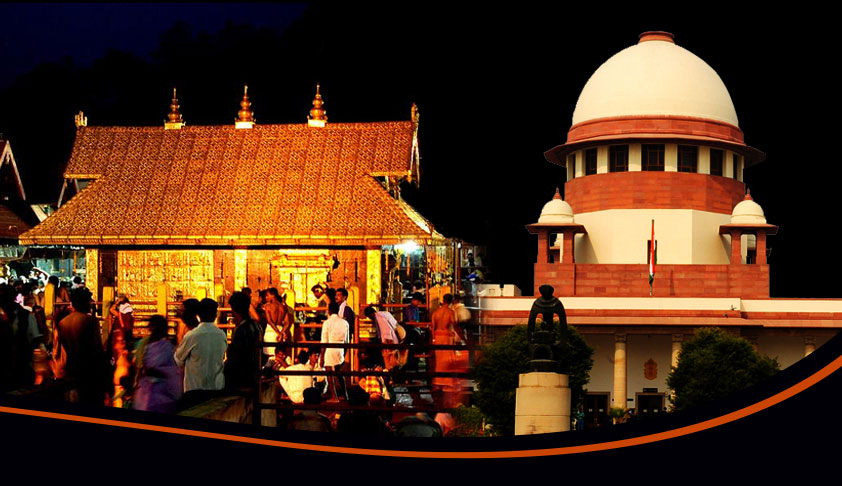
New Delhi : Supreme Court begins hearing on Sabarimala women’s entry order; Centre says tradition at shrine could be altered
The nine-judge Constitution Bench of the Supreme Court began hearing today on whether the order allowing women to enter Kerala’s Sabarimala temple should continue.
The arguments are currently focused on whether the proceedings concern a review of the original Sabarimala verdict or are limited to answering the seven constitutional questions referred to the larger bench.
In its written submission filed ahead of the hearing, the Central Government stated that the restriction on the entry of women aged 10 to 50 years exists because Lord Ayyappa is revered as a “Naishtika Brahmachari”, meaning a deity who has observed lifelong celibacy.
The Centre argued that the restriction is not linked to notions of purity or the status of women, but is rooted in the temple’s long-standing religious tradition. It further submitted that allowing women’s entry could change the established mode of worship and traditional practices at the shrine, potentially affecting the religious diversity protected under the Constitution.
The wider hearing on gender-based access to places of worship is not limited to Sabarimala. The Supreme Court is also expected to examine related issues, including:
- whether women should be allowed entry into mosques
- the issue of female circumcision in the Dawoodi Bohra community
- whether Parsi women who marry outside the faith should retain the right to enter Parsi religious places
The court’s decision is likely to have significant implications for the interpretation of religious freedom, gender equality, and constitutional rights across different faiths in India.