
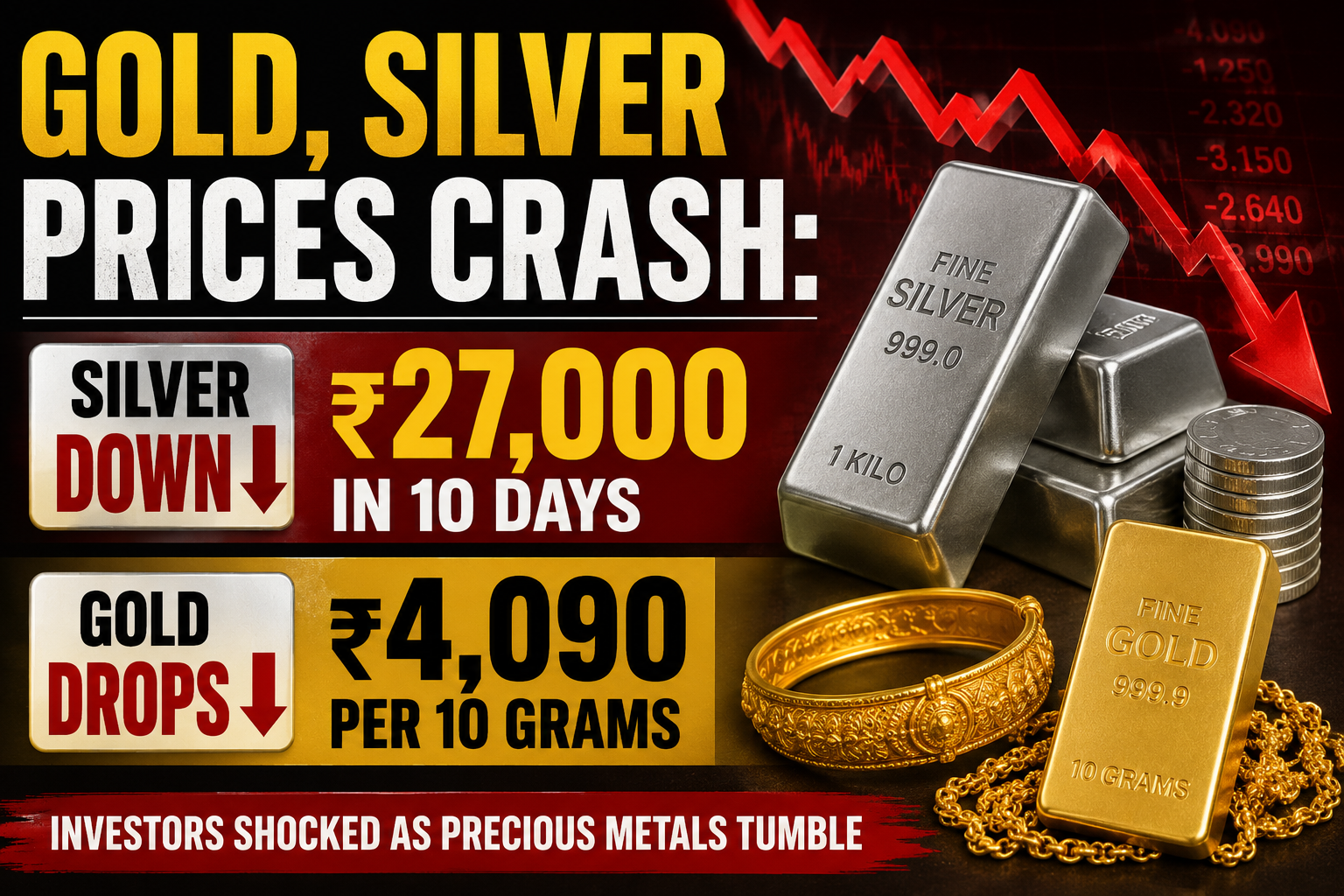
New Delhi, June 10: Gold and silver prices witnessed a significant decline on Tuesday as escalating geopolitical tensions in the Middle East triggered profit booking and increased demand for cash among investors.
According to data released by the India Bullion and Jewellers Association (IBJA), the price of 24-carat gold fell by ₹4,090 per 10 grams to ₹1.48 lakh. Silver prices also registered a steep decline, dropping ₹9,658 per kilogram to ₹2.36 lakh.
The correction comes after a strong rally in precious metals earlier this year, with both gold and silver retreating sharply from their record highs.
Silver Loses ₹27,000 in Just 10 Days
Silver has witnessed one of its steepest short-term declines in recent months. On May 31, silver was trading at ₹2.63 lakh per kilogram. Since then, prices have fallen by nearly ₹27,000 in just ten days.
Gold has also lost around ₹8,000 during the same period, reflecting broad-based weakness across the bullion market.
Market experts attribute the decline to growing uncertainty surrounding the geopolitical situation in the Middle East. Investors are increasingly shifting from precious metals to cash positions as a precautionary measure amid fears of further market volatility.
Silver Down ₹1.50 Lakh from Record High
Precious metal prices have remained highly volatile throughout 2026.
Gold, which was priced at ₹1.33 lakh per 10 grams on December 31, 2025, surged to an all-time high of ₹1.76 lakh on January 29, 2026. Since then, the yellow metal has corrected by nearly ₹28,000.
Silver has experienced an even steeper fall. The metal was trading at ₹2.30 lakh per kilogram at the end of 2025 before soaring to a record ₹3.86 lakh per kilogram on January 29.
Since that peak, silver has plunged by nearly ₹1.50 lakh per kilogram over the past 130 days, making it one of the sharpest corrections in the bullion market this year.
Why Are Gold and Silver Prices Falling?
Traditionally, gold and silver tend to gain during periods of geopolitical uncertainty. However, analysts say the current market environment is different due to two key factors:
Investors Prefer Cash Over Metals
With uncertainty surrounding the Middle East conflict, many investors are choosing to hold liquid cash rather than precious metals. Market participants are selling gold and silver holdings to maintain cash reserves and reduce risk exposure.
Profit Booking After Record Highs
Gold and silver prices reached historic highs in January 2026. As a result, large institutional and retail investors have begun booking profits by selling their holdings at elevated levels.
The increased supply of bullion in the market has put downward pressure on prices, accelerating the recent correction.
Market Outlook
Analysts believe precious metals could remain volatile in the near term as investors closely monitor developments in the Middle East and global financial markets. Future price movements will largely depend on geopolitical developments, central bank policies, inflation trends, and investor sentiment.
While the current correction has reduced prices significantly from record highs, experts say gold and silver continue to remain important safe-haven assets for long-term investors.